
The theatre space at artsPlace is humming with low-key anticipation. It’s a different feel from regular performance nights. With dimmed lights and cabaret-style cocktail tables arranged casually around the room, folks seem more relaxed and eager to chat. Pats on the back, big smiles, hugs—many greet each other like they’re old friends. The atmosphere is so intimate, it’s almost as if we’re sitting in somebody’s living room.

One key difference—the professional gear set-up on the stage. With the spotlight shining down on a row of microphones in the centre and another on the piano in the corner, everyone quiets down as gentle vocals of Noah and Mica Isaac fill the space, along with the first notes of piano and guitar.
All eyes in the room directed toward the two young musicians, the brothers’ initial nervousness quickly dissipates into relaxed concentration as they sing their new original tune for the very first time.
“We haven’t had much time to practice this one, but we’re going to give it a go anyway,” Noah says to the full room, and you can tell there is a special kind of comfort to him knowing the audience will be supportive and kind.
For Julie Chang, the open mic host, it’s all about creating a safe space where everyone—no matter what stage they’re at in their musical journey—feels supported to put themselves out there.

“I came from the Toronto suburbia, where the music scene seemed so big and intimidating, it felt impossible to try to make it there. And then I came to Canmore and we just started jamming together with my sister and other people, and the reception from everybody was so warm, so encouraging, and so supportive. I’ve never felt that before,” says Julie.
She wanted to make sure that same feeling made it onto the open mic stage from the beginning, and that included creating an atmosphere where kids and young people could feel comfortable and welcomed too.
The response has been amazing, with the events being packed from day one and so many folks—including many young kids who have never performed before—feeling inspired to get up on the stage for the first time.
“To see all the levels, from absolute beginners who have never played in front of anyone, to folks who have been playing for years—they’re all brave to try new things, test new material, make mistakes,” says Julie.
In such an intimate venue, “you can feel the audience react,” says Julie. “The energy in the room is palpable; the listening that happens in that room—the real, true listening, the respect and kindness—is so amazing. I’ve never experienced that before.”

Having grown up in Canmore, the Isaac brothers have always been surrounded by music, with their dad Sean having collaborated with different musicians along the way (including Julie, as The Raven & The Fox). Going to shows, learning different instruments, occasionally playing at their dad’s gigs sparked their interest, which has since evolved into songwriting and playing together at local venues. “I get to make music with my best friend,” Mica says. “It makes it easy playing with someone you know so well.”
“Knowing people from the community who come to the open mics every time also creates that safe space to share,” Mica adds. “It’s definitely nerve-wracking at first to get up there, but artsPlace manages to provide that safe feeling on the stage which makes it more comfortable.”
“To me, it’s always a stage to come back to and practice on, to try new songs and get good feedback from an audience that’s attentive, while at the same time you get this professional venue with proper sound system and Jon, the audio technician, saying ‘I’ve got your back’. No other open mic has that,” says Noah.

That’s another element that stands out at the open mics—the quality of sound.
“I want the acts to succeed regardless of their musical level or caliber,” says Jon Frolick, the artsPlace audio director in charge of sound tech in the theatre. “Everybody gets the benefit of a professional venue where they can feel as comfortable as possible, knowing that the audio will be set up properly so all they have to do is perform.”
The fact that performers don’t have to worry about those technical details adds to the level of comfort needed for them to put themselves out of their comfort zone, and Jon recognizes the impact of his work.
“Many of the folks that come to the open mics are performing for the very first time—they’re nervous, they have a lot of things that can inhibit them—but the one thing that won’t inhibit them is the worry about whether they’ll sound good. We make sure they’re going to sound good,” he says.
Having done this work for years (since the very beginning at artsPlace) and being a professional musician himself, Jon fully understands how important it is to get this right.
“We get amateur people with very little stage experience, and we also get people with a lot of talent, a lot of potential. My hope has always been to contribute to their success," Jon says. "To create a space that helps them learn their craft, learn their instrument, work with others, try things for the first time, push it a little bit, become better and better, and for some of them to pursue music in the future.”
With minimal distractions, the acts that perform at artsPlace open mics not only get professional sound and lighting, but a venue where the focus is on them and their success.
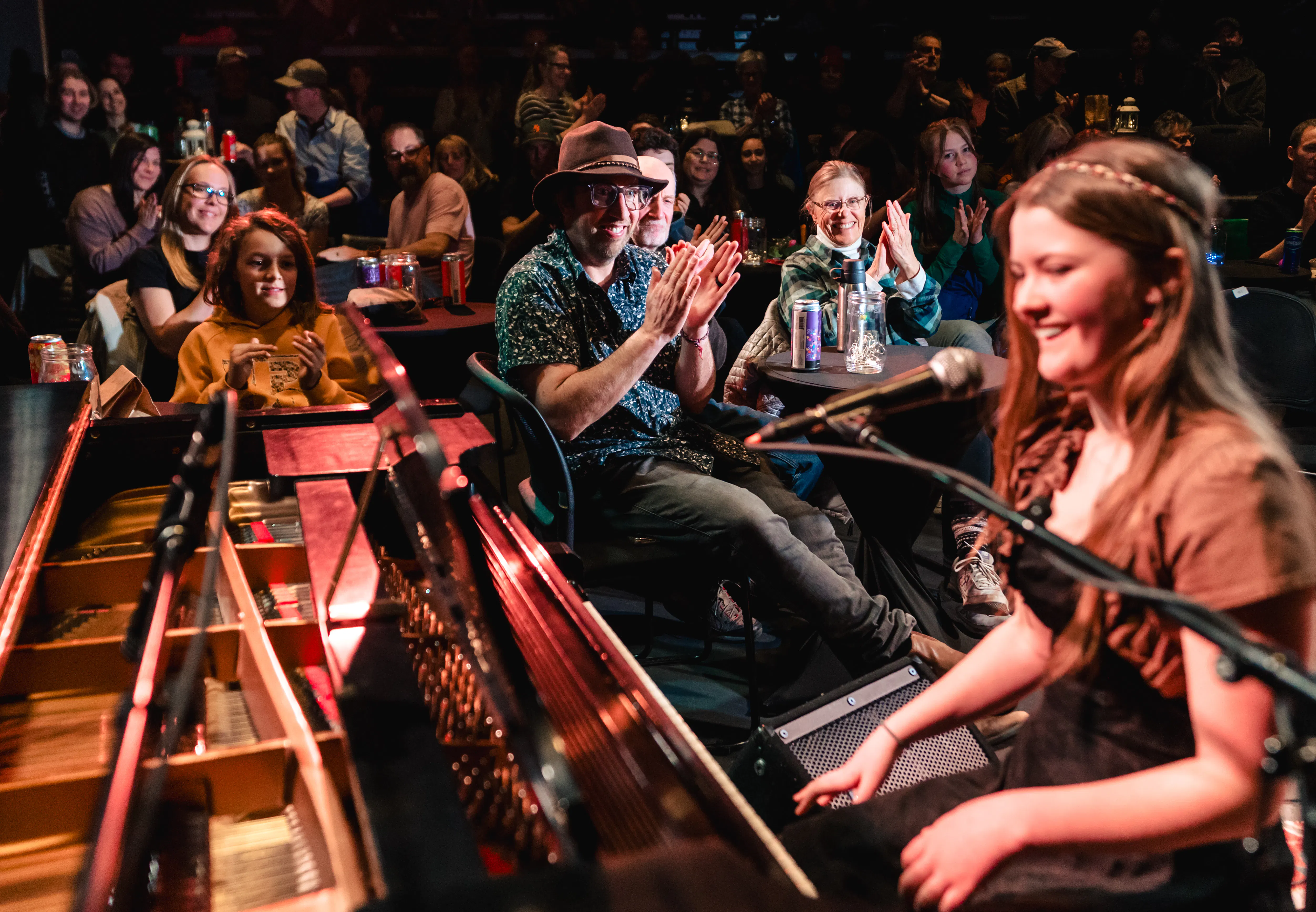
“It’s a different environment, where you’re provided with a stage that’s pretty realistic in the sense that it resembles a professional gig but with a super supportive audience who’s there to really listen to you,” the Isaac brothers agree.
Julie echoes that sentiment, noting how supportive people are of each other.
“It fills me up every time. I kind of feel like it’s my living room—I look at people in the crowd who show up every time and I recognize them, knowing that if they’re in town, they’re going to be here, whether to perform or to listen and support,” she says. “You start to get to know people and to see them grow from the first time you’ve seen them, and it’s incredible.”
“I feel like every time some kind of magic happens in that room,” she adds.

