
When wildfire tore through Jasper on July 24, 2024, it forever altered the landscape and the lives rooted within it. The devastation was felt far beyond the town’s borders. Here in the Bow Valley, where wildfire season is both a reality and a growing concern, our hearts ached for those who lost their homes. Among them was Sasha Galitzki, a glacier aerialist and filmmaker whose new documentary Embers traces her first year after the fire.
In the weeks—and months—that followed, Sasha was left to navigate the shock and disorientation that comes with losing so much, so fast. She felt unmoored, struggling to make sense of the enormity of what had happened. “It felt a lot like drowning,” she recalls. “I was looking for a life raft; something to hold onto to keep from slipping down.”
As she searched for steadiness, Sasha reached for one thing that had always lifted her up: her creative practice. At a time when nothing felt familiar, dancing in the frozen air of glacial ice caves became a way to heal. And documenting her journey through film, a way to signal an urgent message.
“I hadn’t lost everything in the fire. Some things were still with me.” — from the film, Embers
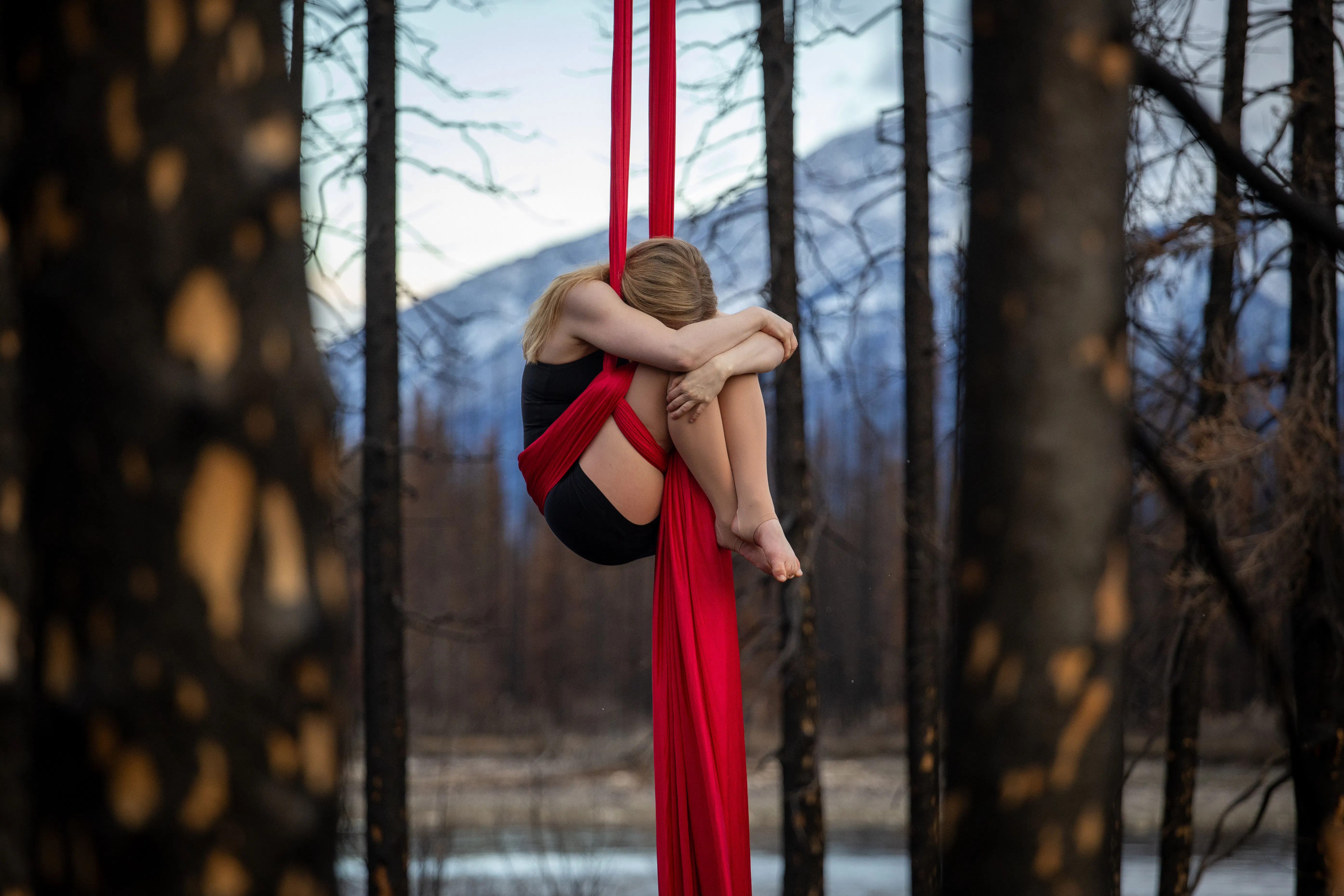
“It’s normal to want to search for answers after something traumatic,” Sasha says. After the wildfire, the questions came fast: Why did this happen? Why this community? “I’ve seen glacial recession, I see wildfires getting worse, and I wanted to understand more about all those things,” she explains.
With help from scientists, wildfire experts, and glacier researchers, she began to trace the shared thread between her personal loss and the changes she was witnessing across the land: climate change.
“Ice is so strong, but also fragile and vulnerable,” says Sasha. “Glaciers have been there for millennia, but now, they’re on track for extinction. We can recognize how fast they’re changing on a human timeline, which is not how glaciers usually operate.”
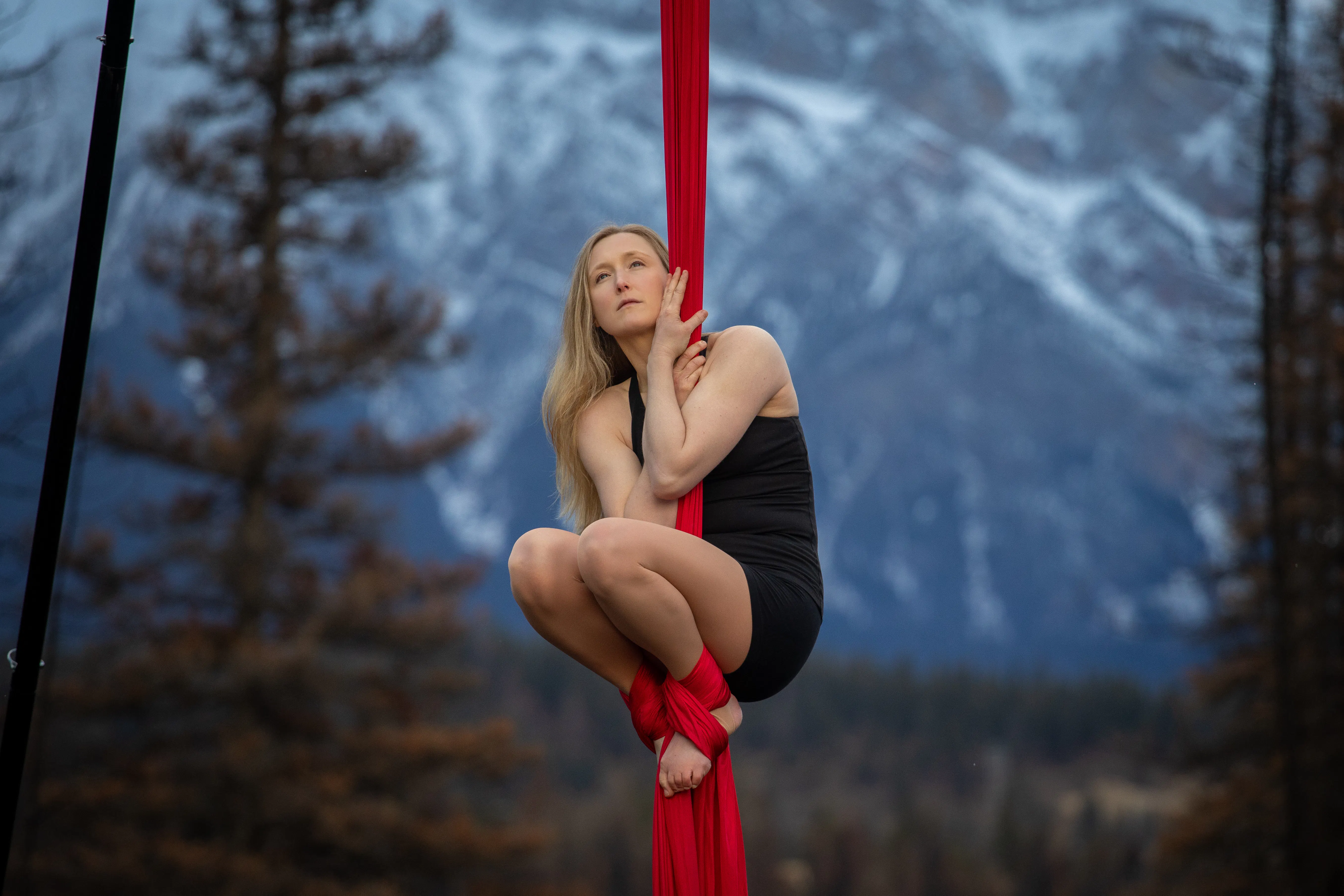
Armed with a deeper understanding of what’s at risk of being lost—and what can still be saved—Sasha returned to her practice with a renewed sense of purpose. Hanging in her silks above disappearing glaciers, she saw how her work could help people engage with these realities in a way that facts alone often can’t.
“I feel like I have a responsibility to use everything in my toolkit—my art and my story—to draw attention to climate change, and inspire hope and action,” says Sasha. “If I share something that makes someone pause and spend a moment with a glacier and feel what I feel there, I think that’s really powerful.”
“Art is my activism. Art is my homecoming when I have nowhere to call home. It’s how I make sense of the world when everything feels adrift.” — from the film Embers
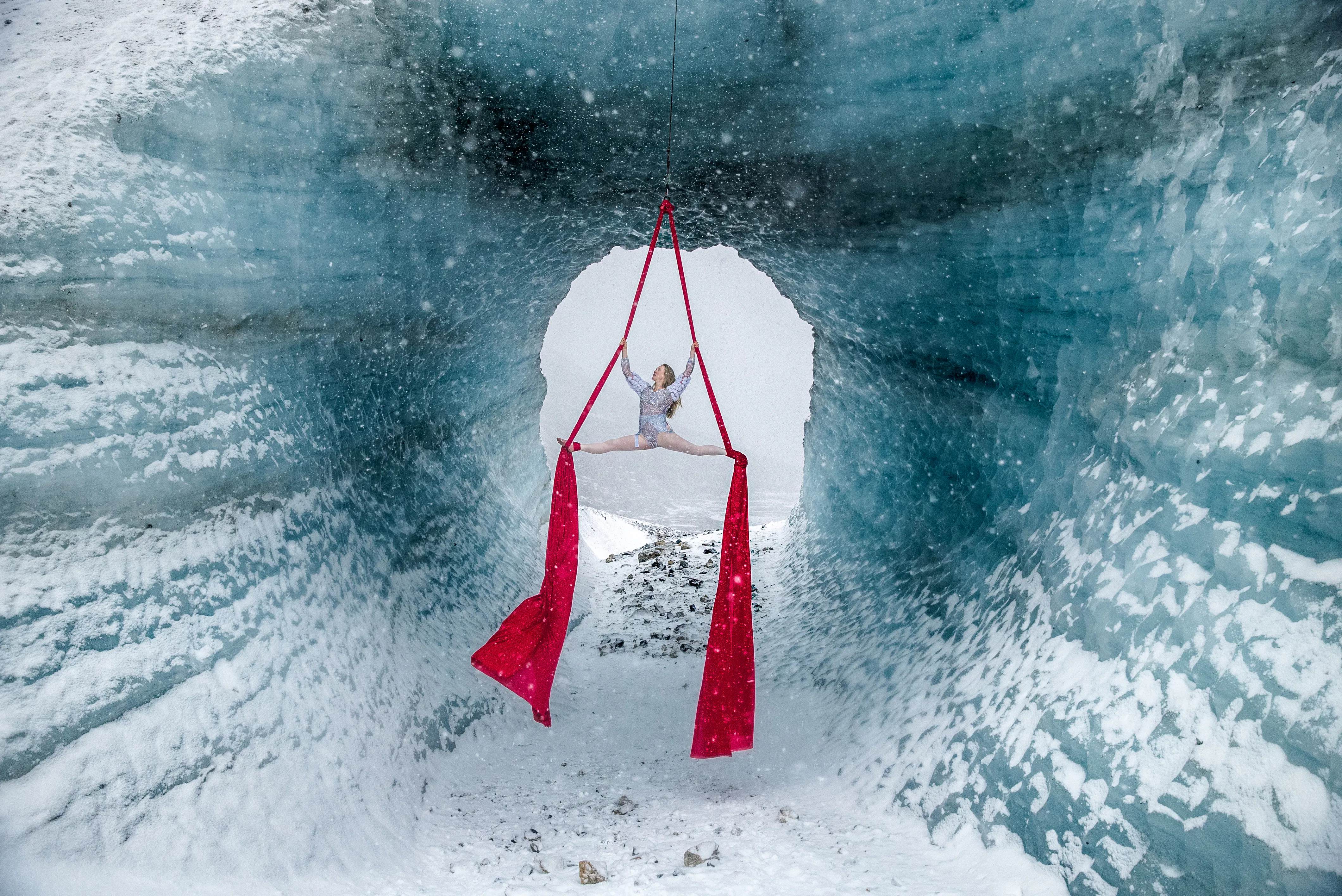
Sasha admits that it’s easy to feel discouraged when thinking about climate change. But she believes the starting point is simple: find something that matters to you. “No matter who you are, you have something to give. It’s a matter of looking inside, connecting with what you care about, and finding the path forward,” she says.

